ISSUE 001 · Oct 3, 2026 · 7 min read
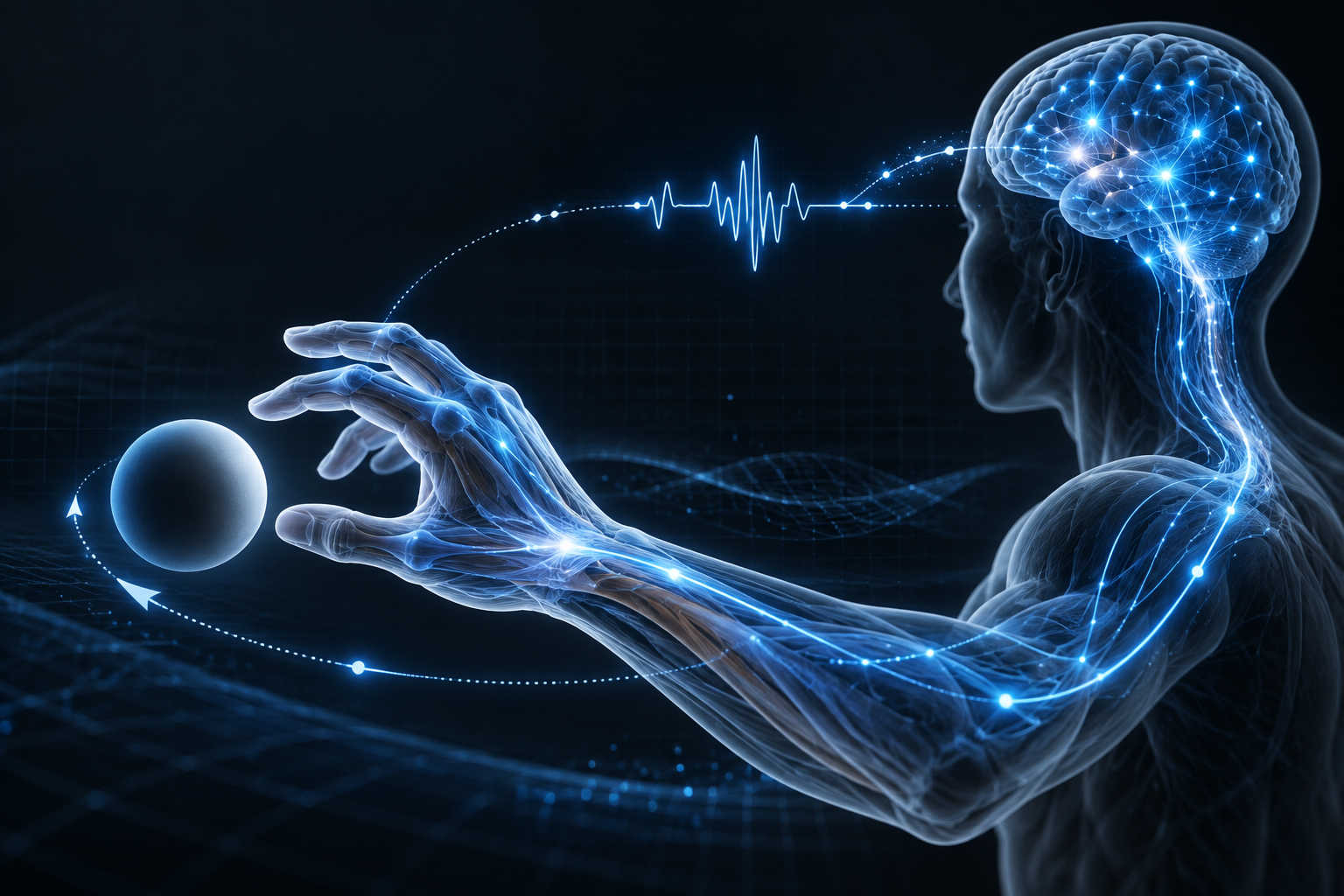
What if stimulation arrived only when a BCI detected motor intent?
Instead of selling another device, design a closed-loop rehabilitation service that learns each patient’s response and adapts timing and intensity.
A closed loop that learns
Reconstructed by ANM from the detection-to-feedback structure shared across BCI-FES trials, with adaptive-policy and outcome-learning stages added.
The opportunity hidden in the evidence
One-month between-group FMA-UE difference in a 17-center, 296-person trial
Pooled immediate effect across ten randomized BCI-FES trials
No group difference in a small trial of severe paresis
CST integrity, signal quality, and durability of effect
Why now
Meta-analyses of randomized trials through 2025 suggest BCI rehabilitation can improve upper-limb function. Yet effect sizes and transfer to daily activity vary, and long-term multicenter evidence remains limited. The next question is not simply whether BCI works, but for whom, when, and how adaptation helps.
Failure conditions and risks
Pause automated stimulation when EEG quality drops and move to therapist-confirmation mode.
Judge success by functional recovery and daily activity—not classifier accuracy.
Keep adaptation inside pre-approved bounds and log every change.
Test purchasing against therapist time, adherence, and outcome-reporting costs.
References
Established facts are separated from research and venture hypotheses that still require validation.
- 01
Wang A, Tian X, Jiang D, et al. Rehabilitation with brain-computer interface and upper limb motor function in ischemic stroke: a randomized controlled trial. Med. 2024;5(6):559–569.e4.
Seventeen centers and 296 participants; the between-group difference in one-month FMA-UE improvement was 3.35 points.PMID 38642555 - 02
Brunner I, Lundquist CB, Pedersen AR, et al. Brain computer interface training with motor imagery and functional electrical stimulation for patients with severe upper limb paresis after stroke. J Neuroeng Rehabil. 2024;21:10.
In 35 analyzed patients with severe paresis, the group difference was not significant; corticospinal tract integrity predicted recovery.PMID 38245782 - 03
Ren C, Li X, Gao Q, et al. The effect of BCI-controlled FES training on upper-limb rehabilitation after stroke: a systematic review and meta-analysis. Front Hum Neurosci. 2024;18:1438095.
Ten randomized trials and 290 participants showed a moderate immediate effect, while long-term evidence remained limited.PMID 39391265 - 04
ClinicalTrials.gov. BCI-FES Therapy for Stroke Rehabilitation. NCT04279067.
A registered trial comparing BCI-FES with dose- and intensity-matched standard physical therapy.NCT04279067