ISSUE 008 · Oct 10, 2026 · 8 min read
What if a home fluid signal called rehabilitation before the arm swelled?
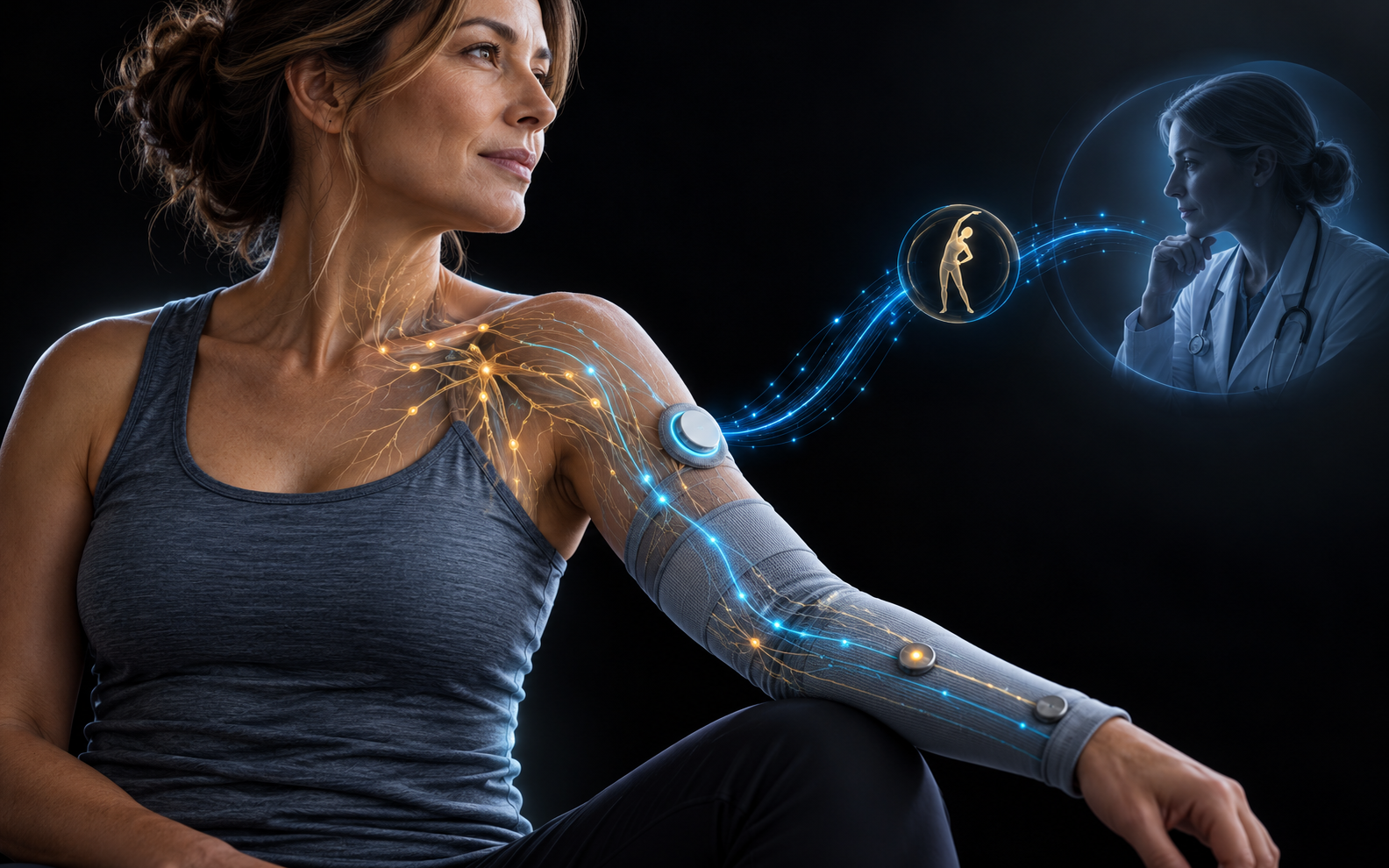
The hypothesis: after breast-cancer treatment, linking each patient’s home bioimpedance trajectory to compression-garment wear data could start rehabilitation before swelling becomes visible and reduce progression to chronic lymphedema.
From subtle fluid change to delivered intervention
ANM proposed model. A home reading is neither a diagnosis nor an autonomous treatment order; it is a repeated, time-standardized signal that starts compression only after clinical confirmation within 72 hours.
Early detection has evidence; the home response network does not
Randomized in the international PREVENT trial; 879 were analyzed
Progression after early compression: BIS surveillance versus tape measurement
Participants and self-measurements in a 2026 one-year home-monitoring pilot
Adherence to the recommended twice-daily home-bioimpedance schedule
Established evidence versus the untested home-response thesis
Established: PREVENT randomized 963 people to BIS or tape surveillance and analyzed 879. When subclinical change triggered treatment, both arms used a sleeve and gauntlet 12 hours daily for four weeks. Among 209 triggered participants, progression to chronic lymphedema was 7.9% with BIS versus 19.2% with tape measurement—but this was not a home-surveillance trial. A 35-person observational study published in May 2026 collected 16,425 home bioimpedance measurements over one year and found strong agreement with clinic equipment; adherence to the recommended twice-daily schedule was 64.3%, and time-of-day variation was significant. FDA’s January 2026 MySOZO 510(k) permits L-Dex measurement as an aid to clinical assessment after lymph-node removal, damage, or irradiation; it does not clear autonomous diagnosis or compression prescribing. The claim that weekly home surveillance prevents chronic disease and creates purchasing value therefore remains a research and venture hypothesis.
Failure conditions and safety, ethics, and regulatory risks
Do not scale unless 24-month chronic progression falls by at least five absolute percentage points and at least one chronic progression is prevented per ten additional compression interventions.
Time of day, activity, and hydration shift impedance. Require repeated measurements at a standardized time and a quality gate; never treat from one alert. Report alerts and spontaneous resolution per patient.
Excess pressure can cause pain, neuropathic symptoms, or skin injury. A trained therapist approves fit and pressure range; impaired sensation, ischemic risk, or wounds preclude remote initiation.
Rapid erythema, warmth, and fever may indicate cellulitis; a new mass, pain, or venous congestion may signal recurrence or thrombosis. Route these to same-day clinical evaluation regardless of the score.
Using the other arm as “normal” can miss bilateral surgery or edema. Require a personal pretreatment baseline and report unreadable and false-alert rates by BMI, skin tone, dominant arm, surgery type, and bilateral treatment.
The existing 510(k) is limited to measurements that aid clinical assessment. Risk scores, automated alerts, compression-order integration, and sensed garments may each require new device, cybersecurity, and human-factors review. Reject patient-month pricing if adherence remains below 70% or rehabilitation workload rises.
References
Established facts are separated from research and venture hypotheses that still require validation.
- 01
Ridner SH, Dietrich MS, Boyages J, et al. A Comparison of Bioimpedance Spectroscopy or Tape Measure Triggered Compression Intervention in Chronic Breast Cancer Lymphedema Prevention. Lymphat Res Biol. 2022;20(6):618–628.
Randomized 963 and analyzed 879. Post-trigger progression was 7.9% with BIS versus 19.2% with tape measurement; the trial did not evaluate home surveillance.PMID 35099283 · NCT02167659 - 02
ClinicalTrials.gov. Bioimpedance Spectroscopy versus Tape Measure in Prevention of Breast Cancer Related Lymphedema.
Primary registry record for PREVENT eligibility, comparators, and three-year follow-up design.NCT02167659 - 03
Bravi L, Teranishi-Hashimoto C, MacDonald EAC, et al. Remote Monitoring of Bioelectrical Impedance in Patients With Breast Cancer–Related Lymphedema: 1-Year Pilot Longitudinal Study. JMIR Biomed Eng. 2026;11:e86624.
Thirty-five participants across four sites contributed 16,425 measurements. Agreement was strong, but 64.3% adherence and significant diurnal variation make this a feasibility—not effectiveness—study.PMID 42085680 · DOI 10.2196/86624 - 04
U.S. Food and Drug Administration. MySOZO Software version 6.0.1.2. 510(k) K253224.
A Class II prescription device for L-Dex measurement to aid clinical assessment after lymph-node removal, damage, or irradiation—not clearance for autonomous diagnosis or treatment orders.K253224 · Jan 28, 2026 - 05
Chen SL, Shah C, Boyages J, et al. The Importance of a Pre-Treatment Baseline When Screening Patients for Breast-Cancer-Related Lymphedema. Ann Surg Oncol. 2025;32(11):8390–8397.
A PREVENT secondary analysis addressing why a personal pretreatment baseline matters when screening for subclinical lymphedema.PMID 40699530